Shatika Handloom Saree

Saturday, January 20, 2018

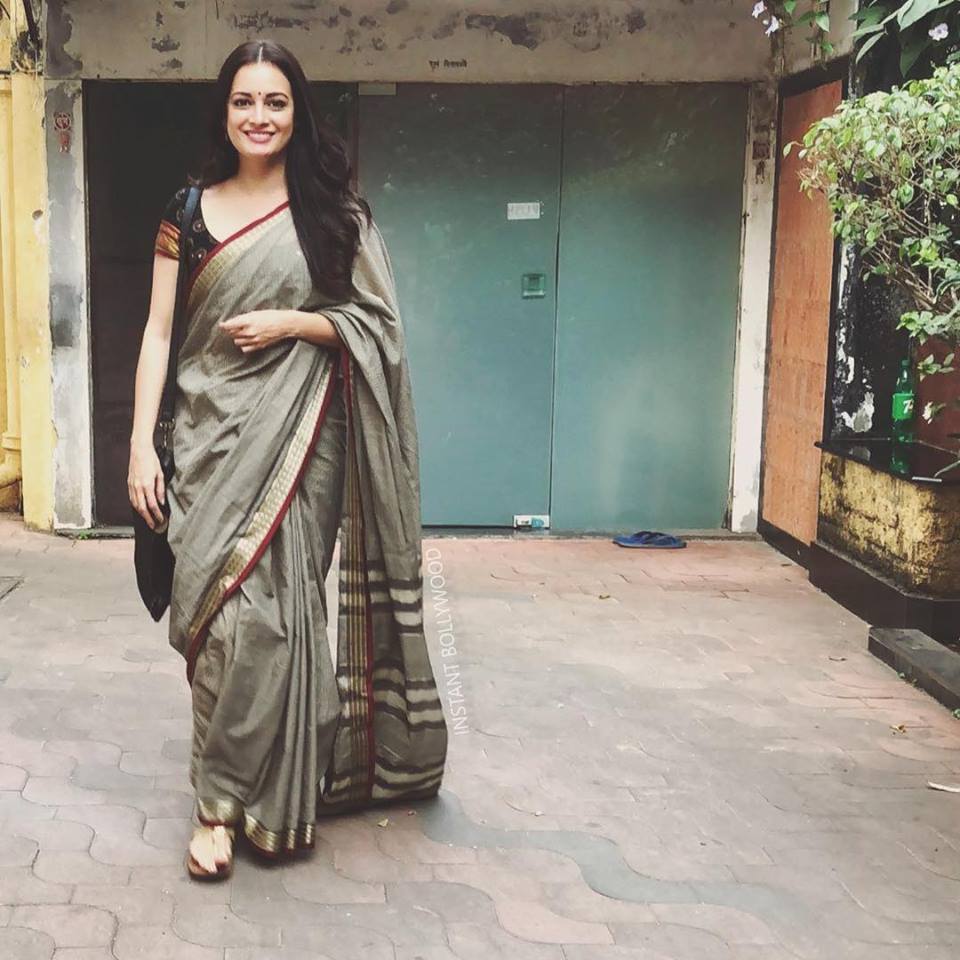
Lustrous Linen Silk Sarees – The Trendy Corporate Collections


Around mid-2017, Nandita Das was a picture of grace at Cannes Film Festival where she was representing her film Manto, sporting an elegant peach-zari linen sari by Anavila Mishra, country’s leading fashion designer. A forerunner of the linen sari movement, her saris have been sported by celebrities including Sonam Kapoor, Vidya Balan and Samantha Ruth Prabhu and each time, stand out for their elegance.


Linen saris are making a statement, emerging as an alternative to six yards of silk and cotton. Saris that had sheen, a good fall and don’t feel heavy, linen silk sarees make a good choice for women who want to dress for an occasion and don’t want to restrict themselves to silk.


National Institute of Fashion Design student and founder of Kolkata based Karomi, Sarita Ganeriwalais fascinated by the possibilities with linen on the loom. “Linen is breathable but has the tendency to be stiff. When linen is combined with hand-spun cotton like khadi, the garment is softer. Similarly, using silk with linen gives the sheen to the sari,” she says.

A lot of research and development goes into weaving linen saris. Finer yarns with counts ranging from 80 to 100 are preferred for weaving linen sarees and the loom is set such that the weaving is a little loose because a tight weave makes the sari heavy and the saree gets crumpled easily. Also, lot of other factors has to be taken into account like whether to use basket weave or plain weave? Whether it has to be a warp based or weft-based sari? Which yarn do we use?Etc..

Qualities of Linen like the ease with which it takes to natural dyes and that it is breathable and has a distinct texture makes it an exciting rape for both weavers and buyers. With linen saris beginning to woo the spotlight, many traditional sari houses and online handloom retailers like Shatika have also begun exploring that space. “Linen is wearable throughout the year in Indian conditions and it’s encouraging when buyers tell us that they receive a number of compliments when they sport our linen saris.” Says a sari house owner cheerfully.

Image Courtesy:
http://bit.ly/2DLz4ha
http://bit.ly/2DnXh00

Tuesday, January 16, 2018

Handloom Sarees – Pallu the Soul of a Handloom Saree


From embellishing the sari to serving a variety of functional purposes, the pallu is the most evident part of a handloom saree and is also the one that poses the ultimate challenge to a weaver's creativity.
Arbidlydescribed as the pallu, the mundhi, the aanchal, the pedre in Marathi and the sharag in Kannada, this outer end piece of the saree, is clearly its most decorative feature on the strength of which its appeal and scalability is largely determined. No prospective buyer will wrap up a sale without taking a look at the saree’s pallu, such is its pull!

From a weaver’s perspective too, pallu is the most challenging part of weaving because of the skill it demands in terms of creativity, mathematical precision and the disciplined geometrics involved in its layout patterning and calculated color scheme. Drawing inspiration from nature, temple architecture, human life and what-have-you, the weaver puts his soul into weaving especially the pallu which is the first to grab the attention of any woman.

According to the stalwarts of saree fashion, pallu gives character to a saree. Certain things are typical to a place and it is the pallu that tells you to which region the saree belongs to. Some of the famous sarees that are known for their pallus are as follows:


  • Baluchari saree pallu is the most crucial part of the saree that lays the entire story from an epic onto its pallu in colored and sometimes zari thread weave.
  • In Kanchipuram silk saree, the pallu may be simple, carrying over the border colour and design with lines and rekhus (motif of a temple spire in serrated lines) or elaborate with birds or animals like swans, parrots, peacocks, elephants or creeper-like patterns, the rudraksh (prayer beads) figuring on it.
  • Intricately woven with pure silk and gold belonging to a tradition more than 2,000 years old, Paithani saree is a true work of art. Hailing from Paithan that is one of the oldest cities of the Deccan located on the north bank of the Godavari, the outstanding characteristic of this saree is the tapestry weave. In the pallu and the border, real zari is woven as a solid tissue background and woven patterns are inlaid in brilliant colored silk threads using the double interlock technique.
  • In Sambalpuri saree, a traditional figured saree, so named after the village in Orissa, a special technique by which the field warp threads are cut and re-tied to different coloured warps for the end piece, a densely threaded and colourful pallu which stands out in relief and looks like fine embroidery, is created.
  • Gadwal sarees from Andhra Pradesh usually with a cotton body with a silk border and pallu, are regarded as prayer sarees by local women who wear them for special religious or festive occasions. Richly brocaded with a contrast pallu and border carrying distinctive patterns influenced by traditions of stone and wood carving of the area, temple motifs like the hamsa, the mythical swan, the yaali or the stylized lion and the double headed eagle are some important figural motifs that adorn the pallu.
  • The dressy Uppada saree pallus from Srikakulam in the Southern district of Andhra Pradesh complement the soft colorful sarees in contrasting shades and zari work.
  • In Bengal tant cotton sarees, the pallu consists of a dominant central band with finer bands on either sides.
Most pallus with detailed and intricate extra patterning with use of motifs like vines, creepers, flowers and fish in colorful threads or zari, creating a densely woven effect at the fad end of a saree provide grand finale to the saree.

Image Courtesy:
http://bit.ly/2D8Zmc1

Monday, January 15, 2018

The Beautiful Black Handloom Sarees for this Makar Sankranthi


Makar Sankranti is the first festival of the year and hence the excitement and preparations for it is more than the others that follow. The most prominent thing about this festival is that it is not just celebrated by a particular community, but in myriad forms by all major communities across the country.

A day to mark the beginning of spring, in Punjab, it is celebrated as Lohri while in Tamil Nadu, it is called Pongal. Like all Indian festivals, it calls for festivities like rich food, puja and dressing up in fineries. In Maharashtra, people celebrate it by flying colourful kites and even hosting kite flying competitions, distributing til - gud ladoos saying til-gudghyaa, god god bola meaning have jiggery sesame ladoo and speak sweetly.


Also, it is customary for people here especially women to wear black on this day. Though black is usually considered an inauspicious colour and not worn on any auspicious occasion, it is the colour of choice for Makar Sankranti. Why, one may wonder?

Here’s why people wear black on Makar Sankranti: It is the day when the sun starts its northern movement, hence this day marks the end of winter and beginning of spring. Being the last day of winter, this day turns out to be the coolest day of the entire season. Since black is a colour that absorbs heat, people wear it to keep warm!

About 50 years ago, there was a custom that said that women should wear a Chandrakala saree that was specially woven for this day. This saree was embossed with crescent moons and star-sands in zari. However, finding an authentic Chandrakala saree today is very difficult. Hence, one usually wears typically a black saree donned with a zari border, a plain cotton saree or even a bold black Paithani saree. 

Today, Makar Sankranti is celebrated as 'Black Day' by many corporate houses in Maharashtra. Not just corporate offices, but in schools and in banks too, black is the dress code for Makar Sankranti. In fact, throughout the state, everyone follows the ritual of bringing out their best in black on this day irrespective of caste or community.


So this Sankranti, be bold wear gorgeous black saree and goad minus the guilt! Select from a host of black sarees in silk, cotton and other textures from Shatika and take away upto 50% off for the festival!

Image Courtesy:
http://bit.ly/2DdoTVq
http://bit.ly/2DgBMgz
http://bit.ly/2DfrzB8

Saturday, January 13, 2018

The Textured Variety of Tussar Silk Sarees


Tussar saris flaunt the rich tradition of Indian textiles. A versatile weave, it allows one to mix and match and create one’s own unique style because, tussar, by nature, is understated.

The silk used to create Tussar saris is exquisite as the cocoons are grown only on special trees such as Arjun, Saja and Sal this gives the sari its unique texture and weave.
A lot more textured than any other variety of Silk, tussar silk is also cooler than the other varieties and is a lot more porous, therefore, breathable.

A subtle textured drape that absorbs dyes easily, Tussar silk sarees come in a riot of colors — from a demure off-white and black to a shocking pink and everything in between in the colour spectrum.
Tussar as a fabric blends well with other fabrics like cotton, linen andjute. Depending on the blend, it can look understated with entire focus on elegance and comfort for office wear, or as an occasion wear, it can be an attention grabber calling out in a way that is difficult to resist!

A saree befitting all occasions, tussar silk saree can be teamed up with a subtle blouse for a formal occasion or one can jazz it up with a vibrant one for a fun event.


Tussar silk sarees either come in traditional colours and combinations that are typically associated with silk or ones that are a result of design intervention like tussars with ikat borders, kalamkari painting, and temple borders.

The current tussar silk saree trends are seen embellished with embroidery, block prints, mirror work, chickan work, bead work and handpaintings like kalamkari and madhubani.
Image Courtesy:
http://bit.ly/2AWwkdK
http://bit.ly/2mqHWQU
http://bit.ly/2CYSygM

Sambalpuri Silk Sarees from Orissa


Among the treasures of Orissa’s vibrant craft tradition, the Sambalpuri silk sarees occupy a unique place. In the 1980s and 90s, these saris, characterised by their distinctive weave and motifs, came into the spotlight when late Prime Minister Indira Gandhi began wearing them during public occasions and they attracted an elite clientele thereafter.

Crafted in the Baandha style, Sambalpuri sarees are woven from yarns that are dyed using the tie and dye technique, wherein the yarns are first tied according to the design to be created and then immersed in color such that the tied parts resist dye. These yarns are later translated into motifs that are woven by the weavers on wooden hand loom.

About 5,000 families in villages like Nuapatna and Maniabandha in Cuttack district are exclusively engaged in weaving. The weaving tradition here goes back several generations. While the women spin the yarn on the charkha, the men do the weaving. High-quality cotton and silk fibres are sourced from other states. The yarn to be spun is washed in hot water to remove impurities and boiled in dye for close to two hours so the color is more permanent.


Sambalpuri sarees use natural dyes that are derived from leaves, bark of trees and minerals. Black dye comes from a decoction of neem and jackfruit leaves mixed with banyan root ash, red from bark of sheesham wood, blue from indigo, yellow from turmeric and crushed minerals and green from herbs and leaves.
There are three main varieties in Sambalpuri saree; Ikkat, Bomkai and Bapta:
  • Ikkat sarees is further classified into Khandwa and Vichitrapuri. While Khandwa is characterized by large flora and fauna motifs, Vichitrapuri is characterized with smaller and sharper motifs.
  • Bomkaisaree is a very elegant saree with single or two-tone border. Rectangular patterns alternating with tiny thread but is scattered all over the body define Bomkai sarees that flaunt rich pallus. With a160-count fineness, it is the lightest cotton weave which makes it ideal for humid climes.
  • Baptasareethat uses silk in warp and cotton in weft show cases ikkat body with threadwork borders and pallus. It takes anywhere between 7 to 21 days to weave one Sambalpurisari, with two weavers to a loom. Bomkai art requires about three weavers, as the thread work is more intricate.
The Sambalpuri silk sarees come in lightweight with plain body and contrast handwoven designed borders and pallus. Heavy varieties are richly worked brocade silks employing different patterns at the body, pleats, pallu and blouse. Embellished with stately temple borders and pasapalli (rolling dice) checks, each sari has a distinct appeal.
Image courtesy:
http://bit.ly/2DsoH1l

Wednesday, January 10, 2018

Weaving of Bangalore Brocade Silk Sarees

Handloom Industries in Karnataka occupies an important place as it provides employment to nearly half a million people in the state. The art of weaving handloom fabrics in Karnataka is an ancient & traditional technique. Bangalore is one of the traditional handloom clusters especially in rural pockets such as Vijayapura, Venkatapura, Nelavagilu, Nagamangala, Jangamakote, Kudur etc., for silk saree weaving. Silk sarees produced in these places are famous for its design, workmanship and colours.

A hub for handloom industry, Bangalore is renowned for silk sarees. The purity of silks combined with intricate weaving techniques and motifs has always put Bangalorepure brocade silk sarees to the forefront, as a wedding wear and festival wear. Known to churn out traditional designs hitherto, Bangalore silk sarees in the recent past have adapted to the changing trends and requirements of the market yet retaining the classic components it is regarded for along with the grandeur of its pure silk.
The artisans, the weavers and the manufacturers of Bangalore silk sarees work in close alliance to cater to the changing market trends and business environment. It is this approach that helps Bangalore silk sarees boom as an industry.


Yelahanka, a small town in the outskirts of Bangalore, which is now a part of Bangalore, is another weaving cluster for Bangalore silk sarees. The founder of Bangalore Kempegowda was the ruler of Yelahankanadu. Historically and even today, Yelahanka is known as the silk hub of south India. The handloom silk sarees of Yelahanka is a silk route of Textile industry. Today Yelahanka has seen a sea of modern development from skyscrapers to shopping malls. However, the making of silk handloom sarees has been its lifeline for over 2 centuries and continues to be so even today.

Unlike the perception, traditional Bangalore silk sarees are extremely popular among the young and urban youth. The sarees are made using pure silk and are woven in a unique style marking a style statement of their own.  They are lightweight though adorned with zari or brocade borders and pallus.
The striking feature of Bangalore silk sarees is their heavy brocade borders and pallus that often come in contrasting colors. The sarees come in rich hues and attractive designs and handwoven, they are perfect for traditional wedding ceremonies and festive seasons.

Amazing features of Mulberry Silk Sarees

Considered as the queen of silk, Mulberry silk dominates the handloom saree industry with its lustre, sensuousness and glamour. A luxurious and mature fabric, the gentle touch of Mulberry silk sarees is very soft on skin. Extremely light and comfortable, its luster is unparalleled. Considered high profile, it is perfect for special occasions like weddings and festivals. Not only for its looks, mulberry silk saree is also admired for its amazingly unique features:
  1. Keeps the wearer dry
While we are all aware that cotton is a breathable fabric, what many of us don’t know is that mulberry silk is even more breathable than cotton! It can wick moisture away twice as fast and reduce the humidity. Thus unlike the usual belief that it is impossible to wear silk in summer, wear good looking Mulberry silk sarees during summer weddings and stay comfortable and dry all day.
  1. Prevents overheating and keeps the wearer cool
Unlike in traditional silk sarees where the body heat gets trapped under the drape, mulberry silk sarees is surprisingly breathable as it efficiently wicks the sweat away. It cools the body down as it allows the sweat to escape from the skin preventing overheating and reducing hot flashes.
  1. Discourages Microbial Growth
Another amazing quality of Mulberry silk sarees is that it discourages bacteria and fungi from growth making them easily wearable even on hot and sultry days in humid climate.
  1. Avoids Skin Allergy and Rashes
Mulberry silk is a natural textile woven from the protein chains making up the silkworms’ cocoon. These silkworms are raised in captivity and feed harvested mulberry leaves to ensure the finest silk fabric is created. This cultivated environment is free of predators, meaning less need for harsh pesticides, like those used in cotton production. Thus, it is not only the softest, sturdiest and most durable silk of all but is also gentle on the skin without causing any skin rashes or allergy.
  1. Improves Complexion
Mulberry silk improves skin complexion because it is chemical-free and prevents bacteria from growing. Since bacteria infects skin and is responsible for acne, Mulberry silk prevents bacteria from infecting the skin in the first place and thereby reducing acne breakouts and also improving complexion.