Shatika Handloom Saree

Saturday, September 16, 2017

Handloom Sarees – Handwoven Sarees from All Parts of India


Check out how the handloom sarees are woven from different parts of India in this blog
Some more popular weaves from across the country:

Chanderi Weave from Central India: Chanderi, MP
Origin and History:
The town of Chanderi in Ashok Nagar district of Madhya Pradesh is known for its historical importance as well as the world famous Chanderi hand woven sarees. Ancient texts speak of MP’s glorious reputation for weaving between the 7th century and 2nd century BC. It rose to prominence in the 11th century, when it became one of the most important trade routes in India.

Weaving Process:
The fabric is woven with warp(tana) which is a set of threads, through which the weft(bana) is passed in regular motion. Since its inception, till about the 1920’s, only white and off-white cloth was woven – the ends were embellished with zari and golden thread.

Special Features:
Referred to as ‘woven air’ because of its transparency and the sheer texture of the fabric, Chanderi handloom sarees are set apart by their light weight and glossy texture which is different from any other textile woven or produced in mass in the country.

Motifs:
Some of the motifs used are ashrafi (gold coin), churi(bangle), bundi(dots), keri(paisley), phul-patti, phul-buta,akhrot(walnut), paan, eent(brick), surajbuti, meena buti, kalgi and ghoongra among others.


Muga Silk from Eastern India: Assam
Origin and History:
Muga silk production came into the spotlight under the Ahom dynasty(1228 - 1826). The craft became an integral part of the social and economic lives of locals.

Weaving Process:
The muga silk produced by the Garo community of Assam, is obtained from the semi-domesticated silkwormAntheraeaAssamensis. These silk worms feed on the leaves som and soalu plants – the silk produced from them is known for its glossy texture and durability. A silk farmer requires access to at least an acre of land if he has to cultivate about 400 gm of Mugasilk in one sitting. This is the main reason why these sarees come with a hefty price tag.


Special Features:
The golden color and shine of the fabric is one of the most unique features of Muga silk. It is also a distinguishing feature of a saree that belongs to this region.

Pochampally weave from Southern India: Pochampally, Telangana

Origin and History:
Bhoodan Pochampally marked its rightful place in Indian history as a silk mine in the 18th century. The weaving process of the traditional Pochampally ikat sarees is said to have been brought to the small town of Pochampally from Chirala, where the art was locally referred to as chitku. The technique has been widely applauded because of the fabric’s unique identity as compared to other ikat producing units. Starting with a small pool of weavers, the town soon came to be known for the classic fabric that they could produce, one which could compete with every silk manufacturer in the country.

Weaving Process:
Ikats are usually of two types – single ikat where only the warp is tie-dyed and interwoven with the weft, and double ikats where both warp and weft are tie-dyed and positioned in such a way that they work together to create the specific design with a signature bleed.


Special Features:
One of the most telling signs of a Pochampally silk saree is the intricate geometric design spread over the fabric. The minute detailing gives it a very captivating effect.

Motifs:
Pochampally ikat sarees are famous for the geometric patterns on them. However, modern Pochampally motifs have a mix of elephants, parrots, dancing girls and flowers.


Courtesy:
http://bit.ly/2vYwWOm
http://bit.ly/2jvbApR
http://bit.ly/2fnV4nk
http://bit.ly/2tZ5e6C
http://bit.ly/2eZmZcF

Tuesday, September 12, 2017

Handloom Sarees – Handwoven Sarees from All Parts of India

The saree dates back to the Indus valley civilisation which flourished between 2800 BC and 1800 BC. This unstitched garment of sheer beauty, elegance and charm continues to charm women from every region in India even in the present day. Here is a lowdown of four popular handloom sarees from the four corners of the country:

North Indian Weave: Benarasi, Banaras, UP
Origin:
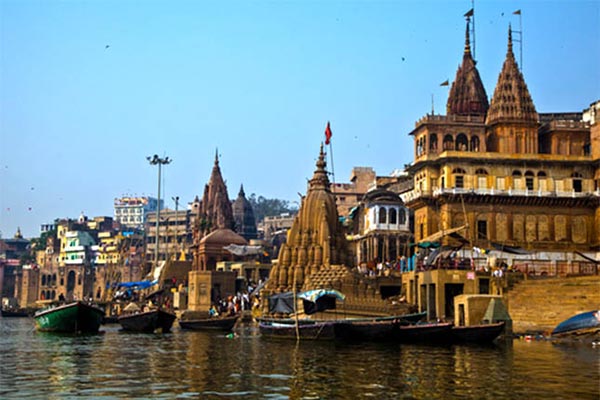
Historians trace silk work to vedic times. Hiranya finds mention in the revered Rig Vedas as the attire of the gods. Some scholars believe that this description comes close to the embellished zari work, synonymous with  Banarasi silk sarees. The timeless Jataka tales and Pali texts support the evidence of a bustling cloth trade on the banks of the Ganga, in Kashi.


Weaving Process:
The zari threads are made as follows: Flattened thin metallic strips are drawn from gold alloys. These strips are then wound around silk yarns. The threads are then flattened using machines. Often they are passed through a brightener to increase their sheen.


Special Features:
The saree designs are created on paper – the pattern is punched into the paper, making it look much like Braille.

Motifs:
Back in the Mughal era, designs consisted of Islamic motifs such as floral patterns, stylized leaves etc. During the British era, the Victorians often demanded geometric patterns. Today, one can find a variety of motifs like Hindu gods embossed on cushion covers etc.


Time Taken:
Minimum time taken to make an ordinary Banarasi saree is 15days. It varies based on the intricacy and detailing involved.

South Indian Weave: Kanjeevaram Saree, Kanchipuram, Tamil Nadu

Origin:
Kanjeevaram silk saree is a creation of the craftsmen living in Kanchipuram situated near Bangalore. The silk used in the creation of this saree is extremely fine as well as durable and is one of the most popular forms of silk in Chennai.

Weaving Process:
The procedure commences with the task of preparing the thread, which is used at the weaver’s loom. This involves twisting the thread and then dyeing and drying it in the sun. The border, the body and the pallu of the sari are created separately by the weaver.

Motifs:
In Indian Kanchipuram sarees, designs replicating Pallava temples, palaces and paintings are depicted. However, these days one can see scenes from great epics, Ramayana and Mahabharata, along with the Bhagwad Gita being as motifs. Tribal designs as well as contemporary patterns are also seen.


Time Taken:
Minimum time taken to make a simple Kanjeevaram saree is 12days. It varies based on the intricacy and detailing involved.

East Indian Weave: Sambalpuri, Sambalpur, Odisha

Origin:
Also known as Bomkai sarees, they have been a part of the rich culture of Odisha since 600 BC. There is historic reference that the designs adorning these sarees are inspired by the cave paintings of Khandagirithat were built during 2nd century BCE. These sarees are woven with the jala technique.

Weaving technique:
Traditional jaalas are used for weaving Bomkai sarees where wooden jaalas are used for tying which is step ahead of the tie and dye technique.
Motifs: Bomkai sarees commonly depict images of flora, fauna or geometrical patterns. Popular patterns like rukha(pestle), karela(bittergourd), dambaroo(hour-glass shaped drum), kanthiphoola(small flowers) mayor/mayuri(peacock), fish and other custom made designs take centre stage in this enticing weave. Traditional motifs like shankha(shell), chakra(wheel), phula(flower), adorn the saree.


Time Taken:
Minimum time taken to make a Sambalpuri saree is 20 to 25days.

West Indian weave: Bandhani, Rajasthan

Origin:
‘Bandhani’ is derived from the word ‘Bandhan’ which means tying up. It is an ancient art practice that is mainly used in the state of Rajasthan. Some 5000 years ago Indian tie and dye or Bandhani was started. Centres in Rajasthan like Jaipur, Sikar, Bhilwara, Udaipur, Bikaner, Ajmer produce odhnis, sarees and turbans in Bandhani. Another school of thought says Bandhani work in India was started by the Muslim Khatri community of Kutch.

Weaving Process:
The art of Bandhaniis a highly skilled process. The technique involves dyeing a fabric which is tied tightly with a thread at several points, thus producing a variety of patterns like leheriya, mothra, ekdali and shikari, depending on the manner in which the cloth is tied.

Motifs: Very elaborate motifs are made, in tie and dye work. These include flowers, creepers, bells and jalas. Knots are placed in clusters, each with a different name, for example, a single dot is called ekdali, three knots is called tri kunti and four knots is chaubundi. such clusters are worked intricately into patterns such as Shikhar(mountain like), Jaaldhar (web like), Beldaar(vine like )etc.


Time Taken:
Minimum time taken to make a Bandhani saree is 20 days.

Image Courtesy:
http://bit.ly/2vRkHD3
http://bit.ly/2ffoTWU
http://bit.ly/2w4ytWU
http://bit.ly/2y2CjgM
http://bit.ly/2wYr2j7
http://bit.ly/2vRlbcw
http://bit.ly/2wUAB3f
http://bit.ly/2wmqe3X
http://bit.ly/2h0xUXP
http://bit.ly/2f2cpVG

Saturday, September 9, 2017

Khadi in Fashion – Faces behind Revolutionizing Khadi Sarees

Creating highbrow aspiration, turning handspun khadi into affordable luxury for a discerning clientele, fashioning the weave, modernizing the hand woven khadi sari, making design interventions to save the weave from the sea of power-loom fabrics and launching sustainable businesses with weaving clusters, the stalwarts of handloom, both established as well as budding designers are responsible in introducing an urban sensitivity to khadi. Today we bring you a list of renowned designers who by relentlessly working with crafts, creating beautiful embroideries and reinventing traditional embellishment, dyeing and printing techniques on handlooms, khadi in particular have brought in a mind shift in the way khadi is perceived today as a luxury commodity from a Gandhian ideal of a handspun humble fabric.

Madhu Jain, Delhi:
A name that is synonym with Ikat and Kalamkari in Indian fashion, Madhu Jain, a designer from Delhi set the ball rolling for khadi when for the 7th World Bamboo Congress in 2003, she wove bamboo with silk, Khadi and Chanderi in collaboration with model Milind Soman.She is known to have revived a handspun and handwoven Khadi saree woven by Jawaharlal Nehru in 1941 which was worn by Maneka Gandhi for her son Varun’s wedding in 2012.She calls it a ‘piece of history’.


Sabhyasachi Mukherjee, Kolkata:
Known to present handwoven fabrics in a luxe-bohemian way for prêt and bridal wear, Sabhyasachi is known for his extravagant use of cotton, Khadi sarees and Banarasi weaves in his couture and thus instrumental in making khadi look pompous and luxurious.


Rohit Bal, Delhi:
India’s most charismatic and famous couturier, who loves embellishment, embroidery and grandeur in his clothes and silhouettes, has been working with Varanasi looms for years and was one of the first group of designers chosen by the Khadi and Village Industries Commission (KVIC) to create affordable, ready-to-wear Khadi garments. His love for, and commitment to, Khadi along with mulmul and Banarasi brocades is steady for years now. It is said that his Banarasi and Khadi saris, stocked at his stores, are never advertised, yet they’re picked up rapidly by a loyal clientele before the word spreads.


Rajesh Pratap Singh, Delhi:
Pratap’s design philosophy is rooted in synchronizing Indian textiles with modern silhouettes. His dedication to textile innovation, R&D approach to fashion, and resistance to bling and embellishment as a short-cut to commercial value put Pratap in a league of his own.We guess his love for handspun and handwoven Khadi along with ikat and wool is justifiable then.

Neeru Kumar, Delhi:
A senior textile conservationist, Neeru created ready-to-wear garments and unstitched drapes in the form of handloom sarees from multi hued, softened and contemporary Khadi.


Paromita Banerjee, Kolkata:
Paromita Banerjee from Kolkata celebrates local textiles like Jamdani, Khadi and linen. Known for her street style clothes inspired by Japanese minimalism, she uses fabric leftovers to develop a range that includes patchwork on kimonos and bags; handmade ‘khaata’ (notebooks), buttons, tassels and appliqué ‘kangri’ borders.


Mia Morikawa and Shani Himanshu, Delhi:
With a vision to build a lifestyle brand with a focus on ‘the Khadi way’, the duo engage with rural artisans in Gujarat (Kutch) and West Bengal (Phulia) to create clothes as essential solutions to modern living using naturally dyed clothes in marble silk, Kala cotton and Khadi denim that are 100% handmade.

Image Courtesy:
http://bit.ly/2jbq6D0
http://bit.ly/2wPe2Nh
http://bit.ly/2eNMj5g
http://bit.ly/2wQm32l
http://bit.ly/2wQpwxQ
http://bit.ly/2xW7OZO

How Handloom Sarees Have Sustained the New Fashion Trends

“Fashion is the ‘tail end’ of the work that handlooms have achieved”, says designer Ritu Kumar.India has the most diverse handwoven textile tradition. Compared to cheaper, mass-produced, mill-made textiles, handloom sarees are affordable luxury that adds premium value. The textural and design distinction differentiates hand woven sarees from power-loom textiles.


The reason good enough for renowned designers like TarunTahiliani, J.J. Valaya or Abu Jani-Sandeep Khosla of the senior cadre to NachiketBarve, Rimzim Dadu and Swati Kalsi among the younger brigade to work with crafts, creating beautiful embroideries and reinventing traditional embellishment, dyeing and printing techniques on handlooms.


In fact, the world today is entering a phase where the hand woven sarees is being appreciated by discerning clients. Moving away from the initial Gandhian ideal of spinning at low cost, today artisanship of the loom is treated as a luxury commodity.


“As our Prime Minister has expressed, ‘Handlooms are ‘diwan-e-khas’ and power-loom is ‘diwan-e-aam’. Handlooms are going to be the strongest foundation for future luxury. Eventually, luxury is going to boil down to slow, organic production, community-building and marketing stories around the power of the human hand. Nothing will remain tantamount to luxury other than handlooms,” says Sabyasachi.


As the world moves towards industrial fashion, the idea that only India can nurture, through handlooms, the most natural lifestyle, given the environmental situation in the globe which makes handloom sarees not just a decorative piece of art but a necessity, puts in that added responsibility on our shoulders to sustain handlooms.


Image Courtesy:
http://bit.ly/2wJz8Mc
http://bit.ly/2xQScXs
http://bit.ly/2vOOErq
http://bit.ly/2gOeXar
http://bit.ly/2wbz6cC