Shatika Handloom Saree

Saturday, June 3, 2017

Latest Trends in Silk Sarees


For the working women, the year 2017 has especially been the year of crisp fashion with silk sarees that are trendy yet traditional, making it to their list of formal work life attires. While sarees always look classic at workplace, we are crystal gazing and making updates about the latest work wear trends in sarees so you can benefit from our forecasts in the second half of 2017!

The top five weaves that are trending in the boardrooms and will continue to be seen in the rest of 2017 are:

Plain Silk Sarees:
Flowy floral digital prints and other modern designs are a passé this year. Plain handloom silk sarees in solid colors with minimalistic elegance are an ideal choice at workplace. Right from soft silks to textured tussarsplain is the key to make a statement and mean business.


Kalamkari Silk Sarees:
Kalamkari prints with all their bold designs and colors have a certain elegance and suaveness to them that makes them a hot favorite among working women class. Women at professions from teachers to doctors, to IT- sectors and entrepreneurs, all prefer this style of work at workplace.


Ikat sarees:
Ikat sarees in cotton and silk with their modern designs and colors are bold and beautiful and ooze out confidence, just the thing required for a working lady at her workplace. Because of their modern aesthetic appeal, these ikat sarees are certainly a great work wear option.


Silk Cotton Sarees:
Another range of sarees that are a trend since ages at workplace are the silk cotton sarees. Termed as a 'Comfort Work Attire', the part about these sarees is their diversity and their affordable price ranges. They are certainly a must-have for women who prefer ethnic work-wear.


Khadi silk and Linen silk sarees:
Khadi silk and Linen silk sarees have an aura around them. Naturally lustrous and extremely comfortable, these versatile sarees are extremely friendly on one’s skin and pockets and weigh heavy on smartness and thus hit bang on, on an ethnic work-wear lover’s list.

Image Courtesy :
http://bit.ly/2sdrYMb

Tuesday, May 30, 2017

The Venkatagiri Handloom Sarees of Andhra Pradesh


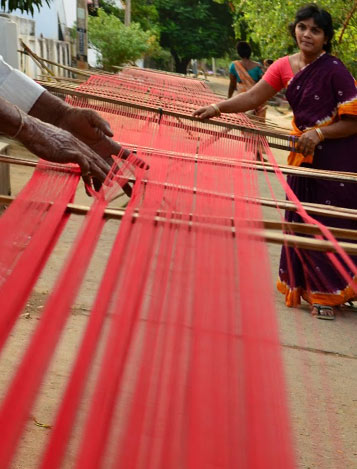
A popular handloom weaving destination, Venkatgiri located in Nellore district of Andhra Pradesh state in India is renowned all over the world for its unique weaving excellence. A drape that’s known to bring feminity and grace, these sarees have been woven for centuries now. History has it that about 500 to 600 years back, the royal family of Venkatgiri moved from Karnul district and settled here and they also brought along with them weavers whose generations are still weaving handwoven sarees here. Currently weaving in the palace of the Venkatgiri Raja, there are about 2600 families that are solely dependent on handwoven sarees for their living. Once upon a time, there were only a handful of sarees made by these weavers to meet the royal needs and the remuneration they got from them was very much sufficient for whole of the year. Their exceptional looks were so popular that there was demand for them from the nearby kingdoms too. And that is how Venkatgiri sarees soon became world renowned.

The two major weaving communities in Venkatgiri are the Padmasali and Devanga communities that are engaged in weaving profession in the area like Manulala pet and Bangarupet. Devanga community weavers are in this profession since 1600 AD. They have all migrated from Kadapa district in 1600 AD. Venkatagiri is famous for "Jamdani" design which was imported from Bangladesh. Four Venkatagiri weavers won President Award for weaving in the past.


The weavers in Venkatagiri mainly produce sarees in cotton, silk cotton and pure silk. The counts in the fabric give the softness to the fabric. More the thread counts, softer is the saree. The counts used in venkatgiri cotton sarees are usually 100 in length and 100 in breadth. In silk variant, it uses the 3 ply technique for weaving. One Pachamat a time can make 4 sarees where pacham is the length of the yarn loaded in looms.


Most of the Venkatgiri weavers go through the merchants for selling the end product. On an average, a weaver can weave about ten sarees a month and earnsabout4000 to 5000 rupees. The yarn is purchased by merchants and given to the weavers along with the designs. They weave the sarees as per the design requirements are given by the merchant. The weavers receive their remuneration once the finished product is returned to the merchant.

Inspite of having award-winning weavers, the handloom industry is dying in Venkatgiri as the weavers here are struggling to make ends meet. The sarees whose exuberance can put a smile on a wearer’s face is failing to wipe out the tears of these skillful artisans who feel helpless in bringing about any change in their poor living conditions today. The only hope is people like you and us who by encouraging the art, can pave a new path in the current gloomy scene of Handloom weaving of Venkatagiri sarees.


Image Courtesy:
http://bit.ly/2qvCS2E
http://bit.ly/2r7gsDp
http://bit.ly/2r73zt4

Wednesday, May 24, 2017


Banarasi brocade is one of the finest fabrics produced in India. Made in Varanasi, it derives its name from the city as it was formerly known as Banaras. One of the oldest cities of the world, Banaras for eons of years has been weaving brocade which is a luxurious fabric similar to jacquard with a raised pattern or floral design. Worn by nobility in the past, the brocade pattern son Banarasi fabric were produced with gold or silver threads and were of an extraordinary weave quality. There is evidence of different textured brocades since the Rig Vedic period c. 1750-500 BCE, including fabric of gold known as HiranyaVastra. A classic mixture of silk and cotton called silkora is a modern innovation of Banarasi brocade.

There are many varieties of Banarasi sarees seen today that are mainly categorized into four types: Katan Silk, Organza or Kora Silk, Georgette, Shattir.

Katan Silk: A plain fabric woven using pure silk threads that are twisted and woven into pure silk sarees, Katan silk is the purest silk fabric available today. Katan silk sarees are woven using handlooms with a beautiful creation of patterns and motifs.


Organza or Kora Silk: Organza or Kora silks are sheer and lightweight brocades that have most beautifully and richly woven patterns patterned into the saree in zari.


Georgette: It is a finely woven light fabric with a simple and plain weave. This fabric is made of crepe yarn where S -twisted and Z- twisted yarns are inter-woven with both warp and weft and is the most popular among all types of  Banarasi.


ShattirShattir is another variant of Banarasi that is used in creating exclusive and contemporary designs of Banarasi sarees. Based on the design and patterning, they are divided into Kincab brocade, Amni brocade, Tanchoi brocade, Jamdani silk and Tarbanaalos known as abarwan.

Kincabbrocade is a variety of Banarasi brocade that’s heavy gilt brocade which is made usingupto50% of zari on the fabric surface. As a result, they are the most dazzling varieties of Banarasi brocades that are famous since the 18tgh and 19th centuries especially amongst the royal members of the societies.

Tanchoi Brocade saris find their basis in China. Tanchoi brocade sarees feature a complex weave with more heavy, dense patterns and typical floats or reverses are absent in this kind of weave.

Amni Brocade Banarasi saris list in the most traditional saris of India. Authentic and traditional, these saris make use of silk and not zari in their supplementary weft patterns. These saris are generally made in both thick designs using untwisted threads and more fine, dense patterns too using twisted yarns.

Jamdani silk Banarasi saris are a variety of figured of muslin. They are created by passing the pattern thread through varying warp threads while keeping the proportion of design in mind. Traditional motifs used in this type of intricately patterned Jamdani sari are Chameli ( Jasmine), Panna Hazar ( Thousands Emeralds), Pan Butti( Leaf form) etc.


Tarbana Banarasi saris meaning woven water, boasts of a silk wrap with a zeri weft. The transparent tissue materials of these saris when woven with finest of silks give an impression of flowing water, hence the name abarwanBorder of these types of saris reflect a diamond pattern with paisley motifs. The more traditional tissue saris encompass designs like JunglaButidaars, Shikargah Menadar etc. Because of their high gold brocade designs, they are the most expensive variant of Banarasi brocades and are highly popular as bridal sarees.

Image courtesy:
http://bit.ly/2rgVaED

Friday, May 19, 2017

A glimpse of the royal handlooms of Madhya Pradesh - Chanderi Silk Sarees


Known as the country's art repository, Chanderi in Madhya Pradesh houses Chanderi silk sarees that are uniquely extravagant sarees and are symbolic of grandeur and rightly come with the title, royalty. The popularity of Chanderi silk sarees was the times of Rajas and Maharajas that in Raja Ravi Varma's paintings, one can see the way he has used Chanderi by looking at the textures of the paintings.

The Warp and the Weft of Chanderi Sarees

Time is a luxury with Chanderi handwoven sarees. With each saree taking about a month and more, the gossamer and silken textured Chanderi subscribes to the tradition of rich and varied textile traditions of India. There is a compelling magic about Chanderi sarees when compared to other silk sarees as the fabric of Chanderi is finer. Because of this one can create wider and more complex borders, which is not possible with other weaves.


Chanderi silk sarees have always been associated with auspicious occasions and traditions. This gossamer fabric from Madhya Pradesh is a timeless weave, which is part of the bridal trousseau of every Maratha family. Convenient and comfortable to wear, these sarees are rather light with a very soft texture and drapes well too. Sarees that have stood the test of time, Chanderi sarees are more versatile in terms of designs compared to the other weaves.

The Maratha royal family has patronized Chanderi sarees for ages. If one happens to see the portraits of the royal family of Baroda, one can find that every portrait depicts the royal heiresses with their sari pleats arranged elaborately at their feet, golden pallu in real zari glistening and the Chanderi saree draped luxuriously over the blouse, creating a subtle glow. In unusual colours such as the subtle blues and the onion pinks which are not commonly found in other silken weaves and motifs like the coin motif and leaf designs that date back 100 years, chanderi sarees are truly royal and are fit for the queens, quite literally!


Image  Courtesy:
http://bit.ly/2ry0tvu
http://bit.ly/2q2AQBO
http://bit.ly/2pRDqze

Monday, May 15, 2017

Top 5 Fashionable Mom-Daughter Jodis

It’s said that Daughters are their Moms shadows. As they look upto their moms for everything, they try and emulate everything of their mom’s be it that caring nature, make up or dressing style!

Attributing this week to Mother’s Day, we bring you celebrated Mother- Daughter duo’s from Bollywood who have shown great ethnic fashion sense and have left us spellbound with their great taste for sarees! This classic mom-daughter jodis may not have shared the same screen space but have certainly provoked fashion photographers to capture their timeless moments in beautiful handloom sarees together.

Dimple Kapadia and Twinkle Khanna:
Dressed to kill in red hot Banarasi brocade sarees, Mother - Daughter duo Dimple Kapadia and Twinkle Khanna sparkle in a jewelry campaign shoot. Regal, elegant and timeless, they looked every bit of diva in the frames, and could give any actress today, a run for their money.

Sharmila Tagore and Soha Ali Khan:
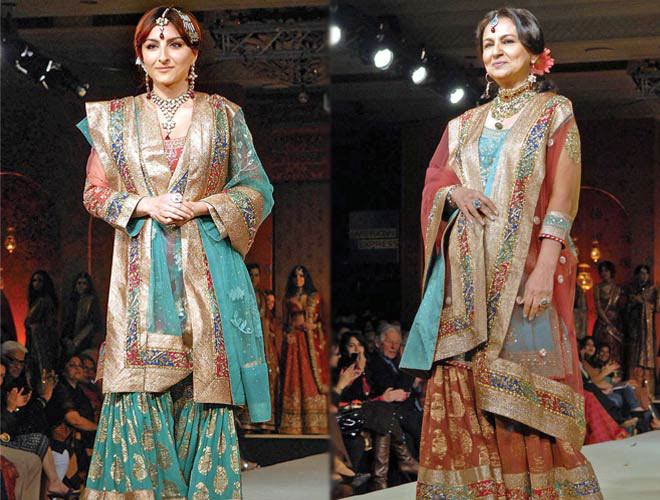
Though they have posed for the camera a zillion times in a saree together, Bollywood actresses Sharmila Tagore and Soha Ali Khan’s heavily ornate identical blue net saree accessorized with 22 carat gold kundan bridal short necklace sets studded with gemstones and ruby emerald drops paired with matching earrings giving them a royal Begum look is our personal favorite.


Jaya Bachchan and Shweta Nanda:
Celebratingrenowned fashion designers Abu-Jani and Sandeep Khosla’s 25 years in Fashion were India’s most iconic Mother- Daughter duo, Jaya Bachchan and Shweta Nanda. Gracing the cover page of Hello magazine in 2012 in off white sarees with heavy bead work teamed up with simple jewelry, both mother and daughter looked elegant and beautiful.


Aparna Sen and Konkona Sen Sharma:
The most talented Mother- Daughter duo in Bollywood, Aparna Sen and Konkona Sen Sharma were seen umpteen number of times in a saree and together, this Jodi not only made jaws drop with their talent but their looks too!


Hema Malini and IshaDeol:
Known as the dream girl, Hema Malini is still a style icon. Her daughter Esha too never goes out of style! And when these two beauties are brought together to pose for the tabloid and that too in dashing sarees, they make history!

Image Courtesy:
http://bit.ly/2r8d63H
http://bit.ly/2riiC19
http://bit.ly/2qILqTw
http://bit.ly/2pBBiM6
http://bit.ly/2qjlH2s
http://bit.ly/2qjrxRy
http://bit.ly/2qiOxQZ

Tuesday, May 9, 2017

Handloom Silk Sarees – BahubaliHeroinsFalunt in Traditional Silk Sarees


Recently as the world went gaga over the larger than life historical fiction movie Bahubali -2, its graphics and 3D effects, there were the fashionistas who could not take their eyes off the clothing sported by the cast of Bahubali 2. While there have been many movies in the past that showcased opulent clothing and affluent jewelry in the past to bring out the effect of the golden historic era, what people liked about Bahubali -2 was the unique fashion sense of the characters, which while being overtly chic and royal can be easily replicated and worn off screen as well.


From humble cotton ikkatskhuns, southern cottons, to uppadasbenarasispaithanistanchois and himroo, the focus once again was on woven beauties, reaffirming that handloom weaves are classic and evergreen and they never go out of trend.

If one could not take eyes off the deep hued monochrome handloom silk sarees, tastefully paired with Benarasi and paithani brocade silk blouses worn by Ramya Krishnan and Anuksha Shetty who belonged to the royal clan, one could also not help but notice the cool khun blouses paired with simple south cotton sarees worn by the common people of Mahismati. Even in the leading men’s wardrobe, one could spot benarasi and tanchoi weaves!


Making a bombastic comeback in this epic saga, handloom sarees are all set to become a rage once again. Replicating the fashion statement, whether it is the rich monochromes worn by Sivagami with fine silver and gold zari borders, or the bright hued uppadas and benarasis silk sarees worn by Devasena, these are some trends one can expect to find in the coming months. Also well-tailored rich blouses crafted from a range of fabrics like paithani brocades to benarasis and uppadas, are likely to replace the flimsy cropped blouses.

In the following months to come, as we foresee traditional silks and cotton handloom weaves replacing the likes of chiffons, chinnonscrepes and georgettes, it’s time to go back to your mom’s wardrobe and bring out those vintage weaves!

Image courtesy:
http://bit.ly/2puN4E1
http://bit.ly/2puR2wm
http://bit.ly/2puN1Ip
http://bit.ly/2pg9XyI