Shatika Handloom Saree

Friday, December 23, 2016

The Best of M4Marry Wedding Week 2016 – Kochi

The exquisite collection of bridal couture displayed at the m4marry wedding week 2016, held from 4th to 6th of November 2016 brought alive the rich traditions of Indian weddings while bringing a new dimension to latest wedding trends. The gala fashion week awesome of India’s finest designers like Vikram Phadnis, Manish Arora and TarunTahiliani showcase the most magnificent ensembles during the three-day event.

The event was one of the most successful events in the world of fashion because not only did it see the fine work of these noted designers but it saw their creations on some of the leading models of the country who carried themselves off with such grace and poise that they left everyone asking for more.

The day one of the events featured collections by Vikram Phadnis, the noted Bollywood designer who enthralled the audience with his beautiful wedding sarees and lehengas in unusual pastels, rich creams and peach and some in vibrant red. With fine embroidery and unique detailed thread and mirror work, he rightly named the collection, ‘Shine’.


Day 2 of the event featured Bollywood’s favorite designer Manish Malhotra’s creations which simply put, were a riot of colors with neon shades like florescent green, florescent pink and electric blue along with bold and dashing whites and blacks. The entire collection of bridal sarees and lehengas set the stage on fire with their intricate zari work and all the finery.


The grand finale of the event however was the awe gaping collection of Tarun Tahiliani that gave the audience a whole new experience of bridal dressing. Sensual and yet not revealing, the wow collection of gorgeous lehengas and bridal sarees were all studded with stones, dazzling gold work and impeccably fine embroidery in zari and thread.

image courtesy:

http://bit.ly/2hufnOP

http://bit.ly/2hWfhAk

http://dailym.ai/2iengvD

Friday, December 16, 2016

The Silken Riches of Karnataka - Silk Sarees from Karnataka

A land of ancient customs and traditions, Karnataka is also home to queen of silks, the mulberry silk. Involved in its production since the Tipu Sultan Era, Karnataka has a rich history of silken rustles. From the enchanting plain weaves of Mysore silk to the more recent and trendy printed silk sarees, the heavily ornate Bangalore silks to humble wear Irkal sarees, every silk saree woven in various parts of Karnataka are dream possessions of every Indian woman.


Every weave of Karnataka has an enriching story to share– story of creativity and hardwork. The sarees of Karnataka while on one hand share a very intricate bond with their weavers, on the other they share a sweet and delightful bond with their wearers. These silk sarees partake in every happy occasion in a woman’s life be it the joy of weddings or the celebration of festivals and every such happy occasions of time spent together.

Karnataka as a state of silk has survived along the length and breadth of the sub-continent because of its vivid variety in sarees. Some of the sarees produced in the state that have made a mark on the world map are:

Mysore silk sarees: Considered the purest silk sarees in the country, Mysore silk sarees come in a hue of plains with a golden lace at the edge of the saree, giving it a classic and sleek look. These sarees undergo very high standards of production and they remain new and good looking for decades.

Bangalore Silk Sarees: Bangalore silk sarees are a unique assort of rich colors and designs. Produced in a multitude of colors interwoven with delicate gold threads, these silk sarees are apt 
for special occasions like weddings and festivals.

Mysore chiffon crepes: A fine opaque crepe silk with supplementary zari borders, Mysore chiffon crepes originated in Mysore are dyed in contrasting colors after the saree has been weaved. Soft, flowy and light textured, these sarees have a unique tactile look that is rather fascinating.
Karnataka is also home to lesser known traditional silk saris like Molkalmuru saris and the Ilkal saris that carry plain body and simplistic narrow borders that might not have gained major popularity but they have gained wide acceptance not just in Karnataka but in the neighbouring states too.


Friday, December 2, 2016

Top Ten Sarees for this Wedding Season

It’s just the beginning of winter and wedding bells are ringing loud and clear all over India! And with the endless occasions that come with the bells, be it Bua’s son’s wedding, Tayaji’s daughter’s mehendi, Nandoi’s sister-in-law’s engagement ceremony or Hubby’s Boss’s daughter’s reception, when the wedding season shows up in India, it is like flood gates open and occasions just gush in! And whatever the occasion, let’s face it, the main motto of every Indian woman is to look her best and get maximum compliments! I mean, isn’t that ‘The’ thing about the whole Baand, Baaja, Baarat! So here’s a check list of all must have wedding silk sarees in the wardrobe of all those women vying for compliments this for the coming wedding season!

1.Gadwal silk saree:

Traditional to the core and yet oh so smart, the varied color combinations in Gadwal silk sarees have no match. The opulence of  on the kadiyal borders and pallus of these silk sarees have the magic of grabbing all eyeballs!


2. Uppada silk saree:

Reflecting the emotions of a woman that is soft and dainty on one side and effervescent and vivacious on the other, Uppada soft silk sarees are a must have if you are looking at making others jealous this wedding season with your hot killer looks and your comfortable calm composure.

3. Paithani Silk Saree:

‘A poem in thread and gold’ as it is called, Paithani silk sarees in their oh so richly crafted pallus and borders and their admirably rare rich color combinations are your pick if you want essays of compliments floating your way!

4. Dharmavaram silk saree:

Crafted for queens in the past, the glorious Dharmavaram silk sarees continue to appease affluent women with their rich and princely looks. Get yourself noticed as an affluent woman on an occasion when you choose to wear a Dharmavaram silk.

5. Banarasi silk saree:

A legacy either made or passed on from one generation to the other, if you don’t own a single piece of this heritage saree called Banasari Kataan silk saree made from the purest silk in the world called kataan, then its time you get one!

6. Banarasi Brocade saree

Adorned in authentic silk and pure zari threads, the opulent Mughal inspired inscription in the form of rich zari motifs on these wedding sarees that are the most ancient tradition of India, are something you cannot deprive yourself of!

7. Patola silk saree

You cannot go without owing a rather prestigious and rare double ikat Patolas of Gujarat that are not just the pride of Gujarat but the intricacy and the rare talent of this very laborious art has brought laurels to the country.


8. Pochampally silk:

Using the expert ancient craft of tie and dye, the blurry and numbing designs of colorful Pochampally ikat silks are rather eye catchy and noteworthy and your wardrobe is incomplete without them.

9. Kanchipuram silk saree:

The most affluent traditional silk saree of the country that depicts the rich Dravidian culture in its designs and motifs along with the top end mulberry silk that it gets made on is something you cannot miss out on in your wedding shopping list.


10. Chanderi saree

‘Woven air’ as it is referred to as, the sheer and transparent looks, the light and airy texture and the silken shine of delectable Chanderi silk sarees are for everyone to see and you for sure cannot deprive yourself and the others of the joy of spectating this wonder saree.

At Shatika, we have a full range of handloom silk sarees that are celebrated weaves from all parts of the country. Take your pick from a handsome collection of a variety of silk sarees mentioned above and many more other varieties of silk sarees.

Monday, October 24, 2016

History of Jamdani Cotton Sarees

Origin -

Early mention of Jamdani was in the book `Arthashashtra’ by an ancient economist, Kautilya, dating back to 300 AD. The golden period of Dhaka muslin or Dhakia began with patronage from the Mughals Since then the demand for jamdani muslin grew at home and abroad. Muslin was used for a variety of things and the muslin was then as light as a feather. During the English rule there was a post created and it was the duty of a Daroga to keep a sharp eye at every stage of production. Mulmul was collected and sent overseas.


Patronage -

According to an account from the middle of the 19th century, white muslin with floral Jamdani cotton Saree designs were used by the rulers and nawabs of Delhi, Lucknow, Nepal and Murshidabad. There were a number of factors behind the decline of the jamdani and muslin industry in the middle of the 19th century. The use of machinery in the English textile industry, import of cheaper yarns from England and lack of patronage from the Mughal Emperors and the aristocracy. After the Partition of Bengal in 1947, official patronage was extended to the jamdani silk cotton saree industry. UNESCO has declared it be a heritage art.

Quality - 


The fineness of muslin cloth used to depend usually on the art of making yarns. The most appropriate time for making yarns was is said in the early morning, as the air then carried moisture. For making yarns weavers needed a bamboo basket, a shell and a stone cup. They used corn, rice or barley for starch. Before making Jamdani Sarees designs they used to dye the yarn and starch it. Coarse yarns are used for designs to make the motifs rise above the fabric. Originally, the motifs were made on gray fabric. Later on fabrics of other colours were also used. In the 1960s, jamdani work on red fabric became very popular. The Victoria and Albert Museum of London has a fine collection of jamdani work in white on white fabric.

Styles of Jamdani Saree:

Jamdani Saree is a unique type of weaving done by hand loom in few areas in Bangladesh. It produces a beautiful, shimmering cloth with various historical patterned on it. This is a region-specific craft practiced in a few rural areas in Bangladesh specially in Narayongonj and Tangail is famous for Jamdani saree, Jamdani has been the most common fabric product of this handicraft industry since long time, is widely popular in all over Bangladesh and in recent time it’s getting more recognition and increasing the demand worldwide.


Designs :

The distinct jamdani work is the geometric design. The expert weavers do not need to draw the design on paper they can do it blind folded! Present day handloom Jamdani cotton sarees have designs of rose, jasmine or lotus. Efforts are underway to revive traditional jamdani sarees price designs. Butidar, meant a jamdani with small flowers diapered on the fabric. Tersa jamdani, if flowers are arranged in a reclining position. It is not necessary that these designs are made of flowers only. There can be designs with peacocks and leaves or creepers. Jalar, if the design covers the entire field of the saree. Fulwar if it has flowers. If it has spots, it is called Duria and Belwari if it has golden borders. However, the long tradition of jamdani craftsmanship is still intact. The jamdani silk saree is beautiful and has patronage from the saree lovers. Shatika itself has an impressive repertoire of these sarees, the jamdani cotton sarees are loved by the woman for their lightweight and the delicate weave.

Thursday, October 13, 2016

Techniques of Printing on Silk Sarees

The entire Printed Saree Collection undergoes a variety of printing methods that can be mainly classified into three categories:

Direct Printing : The most common method of printing patterns on silk sarees, in direct printing, the desired pattern is produced by imprinting dye onto the saree in the form of a paste that is made by adding a thickening agent to some water and dissolving the dye in it.


Discharge Printing : In discharge printing, the sarees is dyed in parts which are then printed with a chemical that erases the colour from the designed areas. This way multiple colors are used in printing by removing the base colour and printing another colour in its place. However, this method of printing is not very popular these days.


Resist Printing : In this kind of printing, a paste is applied to the fabric to resist the dye such that only the areas that are not covered by this resist dye are colored. After dyeing, the resist paste is removed leaving behind the desired pattern on to a dark background.


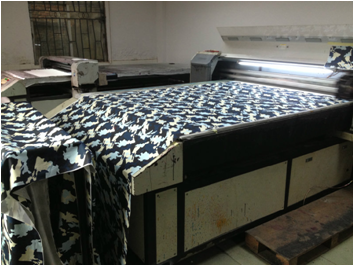
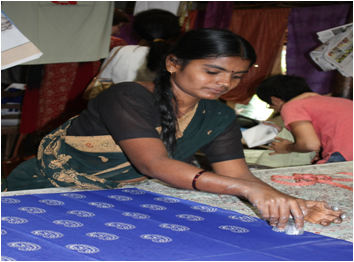
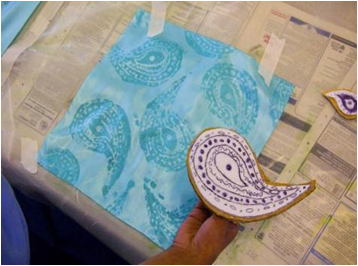
With these three techniques at the base, there are numerous methods practiced in the making of Printed silk sarees. For example: Block Printing, Roller Printing, Stencil Printing, Screen Printing, Blotch Printing, Jet Spray Printing, Warp Printing, Batik Dyeing, Tie Dyeing, Spray Painting and Digital printing to name a few, opening new avenues for weavers to use various mediums to express their creativity in the field of textile printing.

Wednesday, August 31, 2016

List of Top Wedding Sarees from India

In India, the wedding clothes as much as the wedding ceremonies are a fanfare. The wedding event belongs not just to the bride and the groom but the numerous well-wishers who partake in this joyous occasion. Not just the couple looks their splendid best in gorgeous clothes but the family, friends and well-wishers are seen dressed up to the teeth. The bride, which ever part of the country she belongs to, is dressed up in over the top bridal sari that is marked by auspicious colors and opulent work. The guests too attending the wedding are decked out in smart designer wedding saree combined with fine jewelry. Weddings all over India generally run for several days and require women to wear new sari each day depending on the ritual and its significance. It is no wonder then that women in India stock a sumptuous wedding sari collection. Since the rituals and customs vary from place to place, here is a list of popular wedding sarees in different parts of the country:

Image source : http://bit.ly/2bBAno1


Wedding Sarees in East India -
  • Banarasi Brocade Saree
  • Sambalpuri Silk Saree
  • Shalu Silk Saree
  • Mulberry Silk Saree
  • Bhagalpuri Silk Saree
Wedding sarees in West India - 
  • Patola Saree
  • Painthani Saree
  • Bandhej Sarees
  • Kota Doria Saree
  • Bandhani Kota Sarees
Wedding Sarees in North India -
  • Chanderi Silk Sarees
  • Maheshwari Silk saree
  • Kosa Silk Sarees
Wedding Sarees in South India 
  • Kanjeevaram Silk Sarees
  • Gadwal Silk Sarees
  • Uppada Silk Saree
  • Dharmavaram Silk Sarees
  • Mysore silk sarees
  • Salem silk saree
  • Bangalore silk sarees
While traditional sarees hold great significance in each region, the color chosen especially for the bridal sari is of great importance. For example, the Maharashtrian bride has orange, yellow, green and deep pink sari in her wedding assemblage but her main wedding sari is always a deep green with blood red border and pallu signifying prosperity and fertility. The south Indian brides from Kerala and Tamil Nadu wear turmeric yellow sari which symbolizes opulence, grace and beauty. North and East Indian brides flaunt red colored sari as color red is symbolic of marital bliss. Thus the color and the weave put together make an Indian wedding not only potent with a lot of meaning and significance but also a truly grand affair.

Wednesday, August 10, 2016

Trending Silk Sarees in India

Silk Sarees mark the beginning of any new and important event in an Indian woman’s life. A mark of purity, affluence and prosperity, pure silk sarees are an integral part of India’s rich cultural heritage. The handloom silk sarees with their diverse and fashionable offerings that portray an innate sense of style are the crown jewel of every Indian woman’s wardrobe. Though Silk Sarees from India are diverse in weaves, patterns and designs, they have something in common; these silk sarees add an allure to ones persona with their natural magnificence and splendor and are universally accepted as the drape of special occasions. Some of the celebrated silk drapes that have been part of the Indian culture for centuries and are collectibles every Indian woman aspires to have in her wardrobe are as follows:

Source : https://www.hw.ac.uk/news/archive/img/indian-silk-scarves-800x450.jpg


Banarasi Silk Sarees : Banarasi silk sarees are one of the most beautiful and opulent Indian silk sarees that are made in the oldest city of Banaras on the banks of river holy Ganga. These silk saris from Banaras are considered as one of the finest saris in India that are celebrated for their exquisitely fine silk, their opulent gold and silver brocade work and their zari and embroidery. A symbol of pride, happiness, union, and jubilation,Banarasi silk sarees are the most preferred bridal silk sarees among brides to be.

Kanchipuram Silk Sarees : Exquisite silk sarees that are loaded with rich Dravidian cultural heritage, kanchipuram pure silk sarees hail from the temple city of south, Kanchipuram that is also considered to be among the oldest weaving hubs of the country. Noted for their texture, glimmer, permanence and refinement, these handloom silk sarees make great wedding silk sarees.

Chanderi Silk Sarees : Situated in Madhya Pradesh, the heartland of India, Chanderi weaving cluster is considered the heartland of handloom weaving in India. Considered fancy silk sarees due to their sheer texture, light weight and transparency, Chanderi sarees are embellished with zari woven work and are intricately hand woven with the delicacy of the extra weft motifs that not only satisfied the refined tastes of the royalty in past but continue to impress women with their charm in current times too.

Patola Silk Sarees : Yet other finest varieties of handloom silk sarees of India, Patola silk sarees are from Gujarat. While weaving Patola sarees is extremely laborious and intense, they are woven with great clarity and precision. Woven in traditional tie and dye ikat, these glorious as well as gorgeous looking designer silk sarees not only make a great formal wear but are also a status symbol with Gujarati women and an essential part of their closet.

Uppada Silk Sarees : Woven in the old weaving technique of jamdani, Uppada soft silk sarees are one of the most labour intensive forms of hand loom weaving.  Weaved in Uppada, a beach town in Andhra Pradesh these soft silk sarees have artistic zari work in their exquisite designs. Unfathomable display of distinct decorative patterns and designs, these soft silk sarees are loved for their glorious translucent look and light weight.

Mysore Silk Sarees : The Mysore silk saree, needs no introduction. The saree has a glorious past and a vibrant present. The saree is loved for its colours and the simple golden weave. The weavers are veterans in this field and the best craftsmen do our work and Shatika believes in the authenticity and perfection.